
Sonology Articles
Is ‘A’ 432 Hz a myth?
A historical and musicological analysis of the tuning fork, between popular legend and verifiable facts.
Summary
What historical research reveals
By Emmanuel Comte — Centre MedSon, Quebec
Research done by renowned musicologists on musical tuning proves that:
- There was no standard for establishing a reference frequency for the ‘A’ before 1859 (435 Hz) and 1936 (440 Hz)
- The 432 Hz ‘A’ is not a standard and seems never to have been used preferentially
- It appears only once among the 1,500 references cited by musicologist Bruce Haynes
- The 440 Hz ‘A’ was not created by the Nazi regime — it was already in use in Holland before 1670, in Italy and England between 1730 and 1770, in France between 1770 and 1800, and in Germany from 1700
« This is a modern problem, which does not predate the 16th century. »
— Christophe Guillotel-Nothmann
A history of tuning
A recent standard
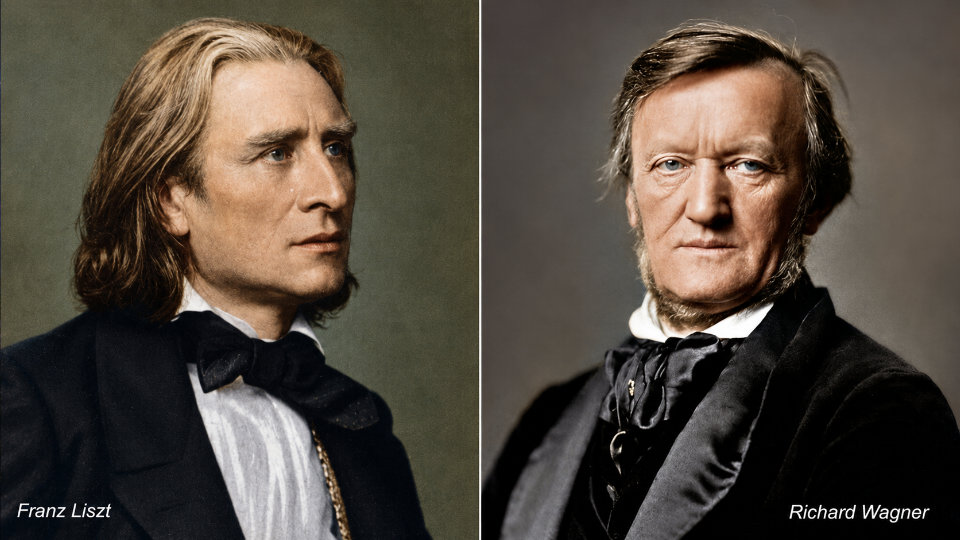
Fig. 1 — Liszt and Wagner used instruments tuned to 440 Hz, common in Austria during the 19th century.
In 1859, musicologist Adrien de la Fage published De l’unité tonique et de la fixation d’un diapason universel. At that time, a reference ‘A’ became necessary to facilitate the trade of instruments and the practice of traveling orchestral musicians.
The tuning pitch fluctuated enormously: 377 Hz in 1511, 440 Hz in 1955. It could vary within the same city and the same church. In the 1830s-1840s, Liszt and Wagner favored a higher ‘A’, around 440 Hz and above.
An unstable pitch
Temperature and historical instruments
An ‘A’ played at 430 Hz at 15°C can drop or rise between 427 and 434 Hz depending on temperature and humidity changes, which directly affect the pitch of sounds.
Some historical instruments retained their own tuning — remnants of an era when pitch was not fixed. On a horn, clarinet, or trumpet, the ‘C’ could sound as a B♭ (392 Hz), an A (370 Hz), or an F (294 Hz): a ‘C’ could sound like an ‘A’, an ‘F’, or a B♭, depending on the instrument and the era.
The myth of 432
Verdi’s tuning fork
Handel had his own ‘A’ (423 Hz), as did Mozart (422 Hz). At a time when the ‘A’ vibrated at 435 Hz in Paris and 439 Hz in London, Giuseppe Verdi adopted the frequency of 432 Hz — a personal choice that, over time, became a myth for some authors seeking to pit the current ‘A’ against this frequency.
The difference between 432 and 440 Hz is only a sixth of a tone, barely audible. Claiming that one frequency irritates the voice more than the other is an exaggeration.

Fig. 2 — Bruce Haynes demonstrated that the 440 Hz ‘A’ was already in use during the Baroque era.
A possible origin
Stradivari and Félix Savart
Félix Savart, discussed in my book Le Son de Vie et la sonorité des Mondes, measured a resonance frequency of Stradivarius violin bodies at 512 Hz. If Stradivari used Pythagorean ratios, the corresponding ‘A’ would be 432 Hz — Verdi may have drawn on this work for his own tuning.
But all of this remains imprecise: the Paris standard tuning fork (officially 435 Hz) actually vibrates at 435.4 Hz. We don’t know whether Savart’s experiments have been redone with modern scientific means — caution is warranted.
The emotional trap
This is not a scientific approach, but an emotional one.
A recording shows baritone Piero Cappuccilli performing the same aria, accompanied successively by two pianos tuned 8 Hz apart. Already convinced and preferring 432 Hz, his emotion and expressions unconsciously influence his tone — a conjuring trick, not scientific proof.
A fragile technical argument
The tension argument
The argument that pianos cannot withstand the « overtension » of 440 Hz tuning doesn’t hold up either. Conductor Herbert von Karajan had his pianos tuned to 445 Hz, and manufacturers design their instruments to withstand various tensions due to humidity changes or orchestral requirements.
Three claims examined
432 Hz — heart, water and the pyramid
Heart rate
Fig. 1 — Heart rate is never fixed.
432 Hz is claimed to be the 360th harmonic of a heart beating at 72 bpm. But the calculation already fails at 71 bpm, and heart rate varies enormously with age and activity — the claim is fanciful.
Water’s frequency
Fig. 2 — The hydrogen bond of water, far from 432 Hz.
The hydrogen bond of water vibrates in terahertz (near infrared) — transposed down 31 octaves, this gives a D-sharp at 310.44 Hz. Far from 432 Hz.
The Great Pyramid
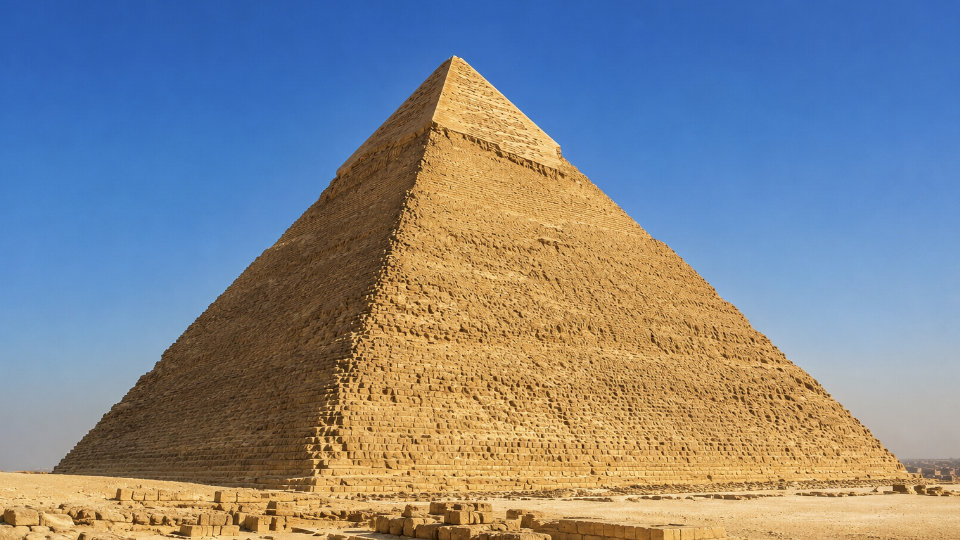
Fig. 3 — Khufu’s proportions have no relation to 432 Hz.
The base of Khufu’s pyramid measures 440 ancient royal cubits, not 432. And confusing a length (meters) with a frequency (Hertz) — inversely proportional quantities — is a basic methodological error.
A questionable calculation
432 Hz and the precession of the equinoxes
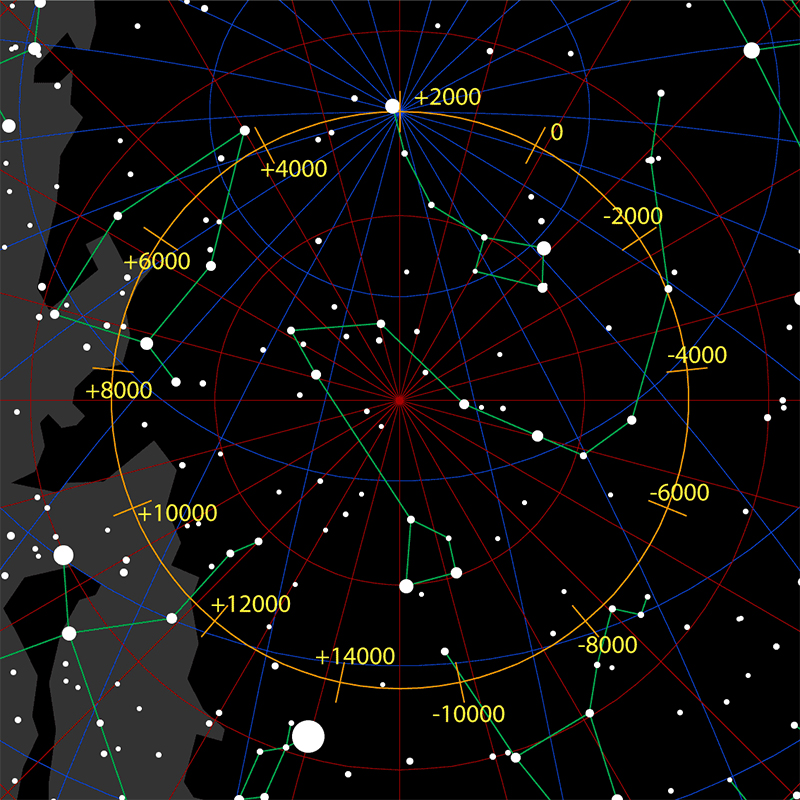
This change of direction is caused by the torque exerted by the tidal forces of the Moon and Sun on Earth’s equatorial bulge. These forces tend to bring the equatorial mass excess back toward the plane of the ecliptic. Since Earth is rotating, these forces cannot change the angle between the equator and the ecliptic, but instead cause the Earth’s rotational axis to shift — a motion tracing the surface of a cone, like a spinning top, gradually changing the North Pole’s orientation among the stars over the centuries.
The equinoctial point thus completes a full backward turn of the ecliptic in roughly 25,800 years — hence the term precession of the equinoxes. Because of this motion, the tropical year (the cycle of seasons) is about 20 minutes shorter than the sidereal year, which matters for leap year calculations. The current value of this shift is 50.29″ per year, or about 1° every 72 years (source: Wikipedia).
A figure that varies by source
Some authors claim 432 Hz is related to the precession of the equinoxes, fixing its duration at 25,920 years — a figure conveniently arranged to fit their theory. In reality, estimates vary: 25,770, 25,290, 26,000, 25,800, or 25,812 years depending on the source. It would therefore be misleading to claim that 432 Hz is exclusively tied to this cycle, since 440 or 426 Hz would be just as much so.
Other claims examined
Chlorophyll, light, and numerology
Other researchers, using convoluted so-called quantum physics calculations, link 432 Hz to chlorophyll, to the speed of light (which, according to the latest research, is not even constant), or to the vibration of oxygen — fantasies with no basis in serious scientific study.
Numerology proves nothing either, being merely anecdotal. 430, 432, 435, 439, or 440 Hz correspond to vibrations per second and an arbitrary reference coding — no serious study conclusively demonstrates that one frequency is better than another, while many parameters interfere in the use of frequencies to, for example, promote seed germination or plant growth.
Cymatics
Photos of vibrating water
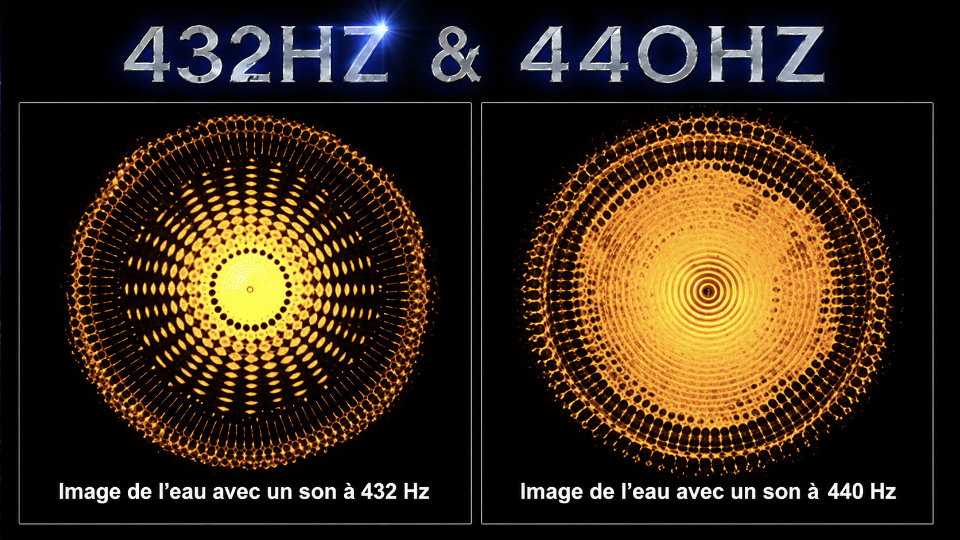
Dutch author Robert Boerman has been publishing beautiful photos of vibrating water since 2007. In 2010, he presented two of them, one at 440 Hz, the other at 432 Hz — a publication that sparked passionate reactions, with some seeing it as scientific proof of one frequency’s superiority over the other.
Both images are beautiful, and neither is superior to the other — outside of a strict scientific protocol, these experiments remain anecdotal, of purely artistic value. In cymatics, the patterns produced always depend on the dimensions and the resonant frequency of the medium used.
In practice
What we use
In our Touch by Sounds® method, we use two different ‘A’s depending on our range of therapeutic tuning forks: the 432 Hz ‘A’ (Pythagorean ratio 27/16 from a ‘C’ at 256 Hz), and the 426.6 Hz ‘A’ from the Zarlino scale (ratio 5/3, just intonation), which is more accurate than the first.
I also use various flutes tuned to 440, 415, or 460 Hz depending on the concert. The 8 Hz difference between 432 and 440 corresponds to less than a sixth of a tone — nearly imperceptible. No serious scientific study proves that 432 Hz is superior to 440 Hz.
432 Hz is a frequency like any other, without the miraculous properties too often attributed to it. To each their own tuning fork — what matters is not the reference frequency of the note you sing, but the tuning of your heart and the frequency of love it reveals.
Examples of intuitive singing
Singing at your own pitch
Fig. 4a — Flash Mob Le Thoronet, Harmonic Choir, June 2014
Fig. 4b — Let the Universe Love You, Valsaintes, May 2016
References — Bruce Haynes, The Story of ‘A’ — A history of performing pitch, Scarecrow Press, 2002. Alexander J. Ellis, Studies in the History of Music Pitch, Frits Knuf/Da Capo Press, 1968. Jacques Chailley, Encyclopedia Universalis, entry: Diapason, 2013. Christophe Guillotel-Nothmann, Université Paris-Sorbonne. Serge Cordier, Piano bien tempéré et justesse orchestrale, Buchet-Chastel, 1982. Emmanuel Comte, Le Son de Vie, Québecor 2011; Le Son des Vibrations, Québec-Livres/Dangles 2015; Le Son d’Harmonie, MedSon 2009-2012.
Additional notes — The Pythagorean scale ratios are: 1 – 9/8 – 81/64 – 4/3 – 3/2 – 27/16 – 243/128 – 2. The ratio for the note ‘A’ is therefore 27/16. The Zarlino scale, more accurate than Pythagoras’, would give an ‘A’ of 426.6 Hz from the same starting note. Gioseffo Zarlino (1517-1590), an Italian composer, sought to improve upon the Pythagorean scale, whose thirds are inaccurate — his natural scale (just intonation) follows the ratios: 1 – 9/8 – 5/4 – 4/3 – 3/2 – 5/3 – 15/8 – 2.
Further reading — Le La 432 Hz est-il un mythe ? (French) · Is the 528 Hz tuning fork a myth?