
Sonology Articles
Is 528 Hz frequency a myth?
An analysis of the so-called « Solfeggio » frequencies — between modern invention and false biblical attribution.
Summary
Another issue worth clarifying
By Emmanuel Comte — Centre MedSon, Quebec
The 528 Hz tuning fork is another issue that deserves some clarification. This article is a companion piece to the one written about the 432 Hz tuning fork.
The purpose of this piece is to raise awareness in the use of sounds and frequencies, and to contribute to their proper integration — here are some clarifications regarding another fashionable tuning fork: 528 Hz and the so-called « Solfeggio » frequencies.
« His offering was one silver charger, the weight thereof was an hundred and thirty shekels… »
— Numbers, 7
Origin of the myth
What is it about?
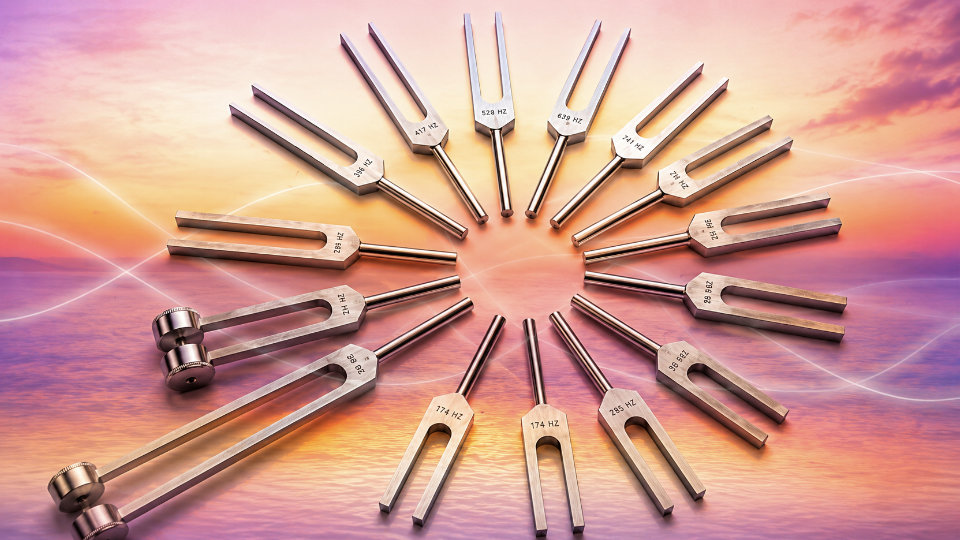
Fig. 1 — The full set of Solfeggio tuning forks, kept in archive at the Centre MedSon.
I learned about these forks a few years ago from my students, and had to look into it. What I discovered, after some research, is a discourse that seems eccentric, closely resembling the arguments used to justify the 432 Hz tuning fork.
Some authors, widely quoted online, refer to the use of frequencies from a so-called ancient solfège that exists only in their imagination. No serious musicological study can support the theories discussed here.
Etymology
The word « solfège »
In its modern sense, the word solfège represents a field taught in music academies that has alienated many people from the original meaning of music. In French and Canadian conservatories, a child must undergo mandatory solfège lessons for at least a year without touching any instrument — the term has become synonymous with tedious classes that have permanently discouraged many children.
The name Solfeggio, given to these so-called therapeutic tuning forks, should therefore be taken with a grain of salt. Etymologically, it comes from the note names Sol and Fa, from which the verb « to sol-fa » was derived — a way of singing by naming the notes, which preceded the more recent method known as solmization.
A very recent reference
No fixed reference before 1859
As explained in our article on the 432 Hz ‘A’, there was no fixed reference in assigning note frequencies before a very recent era — and therefore, a fortiori, none in the Middle Ages. The fixed reference for the ‘A’ dates from 1859 (435 Hz), and the current standard tuning fork (ISO 440 Hz) from 1953 — barely half a century ago.
Latin sung is certainly a vibratory language, but we have serious reservations about the semantic content of Gregorian chants, whose Catholic lyrics are sometimes only distantly related to the original message of Christ — the true Gregorian chant is not necessarily the one transmitted by the Church, which has stripped away many original components.
The Book of Numbers
The invoked biblical reference
The creators of the 528 Hz myth claim that biblical verses from the Book of Numbers (7, 12-83) reproduce « Pythagorean frequencies » — 174, 285, 396, 417, 528, 639, 741 and 852 Hz — which supposedly « repair our DNA » as well. No scientific evidence or clinical study supports such claims.
The passage in question is really just a long list of measurements and ritual offerings — a kind of « grocery list » recording the sacrifices of the twelve tribal princes of Israel, day after day, each one identical: a silver charger of 130 shekels, a silver bowl of 70 shekels, a gold spoon of 10 shekels, animals for the burnt offering and the sin offering.
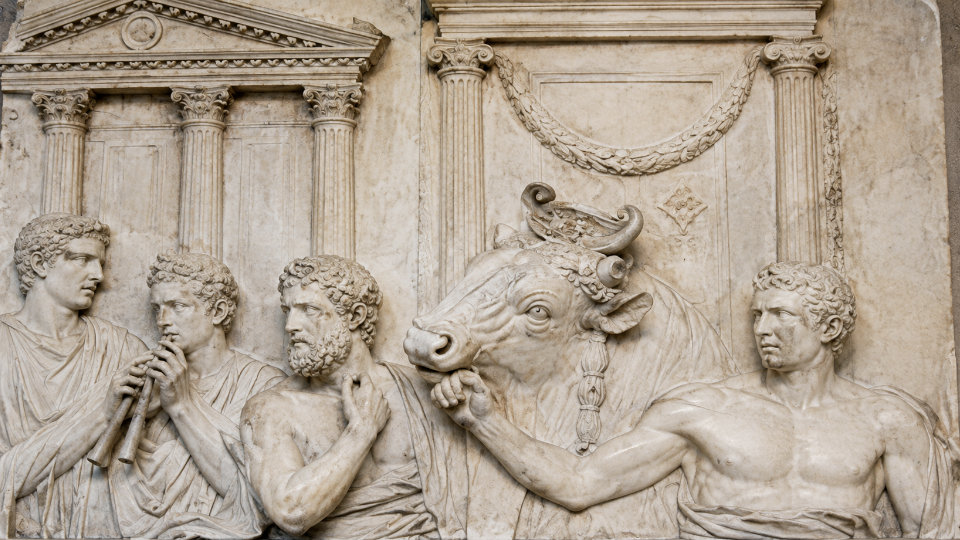
Fig. 2a — Ancient sacrifice.
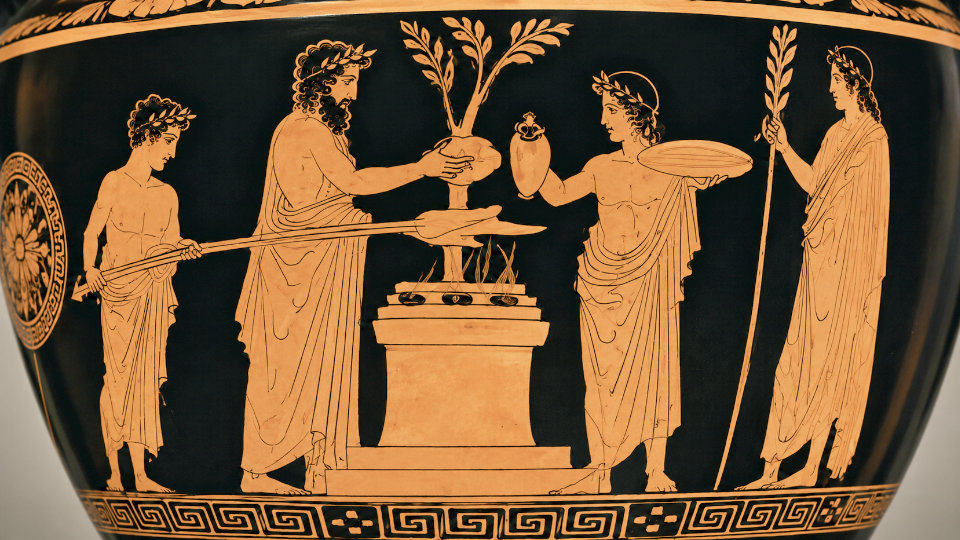
Fig. 2b — Decoration on an ancient Greek vase.
Reducing a text to numbers is not a Pythagorean method — this is called numerology. Taking any random text, a phone book for example, one could just as easily draw numbers from it and construct an equally far-fetched frequency system.
Notes that were never missing
Solfeggio frequencies, a 1999 invention
These authors claim that these codes revealed a series of six electromagnetic frequencies, corresponding to six « missing » notes of an ancient scale called Solfeggio frequencies — a term coined by Leonard Horowitz and Joseph Puleo in 1999. It relates to a belief that six frequencies derived from numerology were used for centuries in Gregorian and Sanskrit chants (one wonders what Sanskrit has to do with any of this).
This is odd, since no reference frequency existed in antiquity or the Middle Ages — at most, low, mid-range and high tones, based on human vocal range. These frequencies therefore cannot have been « lost, » since they never existed in the sense we understand today.
Guido d’Arezzo
The hymn to St. John the Baptist
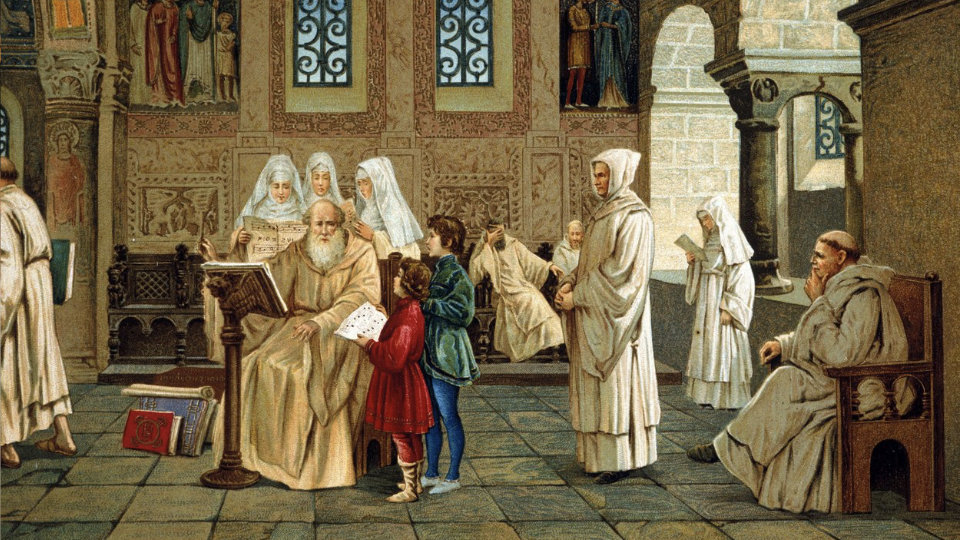
Fig. 3 — Guido d’Arezzo, the « inventor » of the notes, according to the Catholic tradition invoked by Joseph Puleo and Len Horowitz.
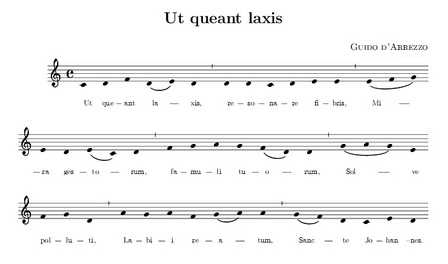
Fig. 4 — The first syllables of each phrase in the hymn gave rise to the notes of Guido d’Arezzo’s scale.
These authors make a great deal of the famous hymn to St. John the Baptist, Ut Queant Laxis, presenting it as a hidden and mysterious chant — when it is in fact very well known and not mysterious at all. Just open any encyclopedia to the entry « musical notes » to be convinced.
According to renowned musicologist Jacques Chailley, the ancient Greeks did not tune fixed pitches, and the formal standardization of notes in Europe dates only from 1859 — these frequencies therefore cannot rest on any serious musicological data.
Ratio analysis
Musicological inconsistencies
No specific pitch was fixed in the Middle Ages or earlier, except in China under very limited conditions. The intervals given in this system are incorrect and do not even follow the Pythagorean logic these authors claim to invoke.
If 528 Hz is an E, the other listed frequencies follow no Pythagorean or Zarlinian ratio at all. If 528 Hz is a C (more logical given the pitch), one obtains an ‘A’ of 440 Hz in the Zarlinian system — the very frequency these authors claim to oppose, accusing it of « setting the mind out of tune » and being the product of an Illuminati conspiracy.
Conclusion
Limiting the vibration of love to a single note would be very reductionist.
These authors claim 528 Hz is well known among biologists and effective at repairing DNA — we have found nothing published anywhere to that effect. Others write that it is « the frequency of love »; yet the frequency of love, and all its harmonics, extends far beyond the emission of a single note. These theories seem to us pure fabrication, but it felt important to point them out — we need clarity to better understand and integrate sounds and frequencies.
Examples of intuitive singing
Singing at your own pitch
Fig. 5a — Flash Mob Le Thoronet, Harmonic Choir, June 2014
Fig. 5b — Let the Universe Love You, Valsaintes, May 2016
References — Jacques Chailley, Le diapason ancien, in Musica No. 17, August 1955, p. 38. The Bible, Numbers, 7, 12-83.
Additional notes — The Pythagorean scale ratios are: 1 – 9/8 – 81/64 – 4/3 – 3/2 – 27/16 – 243/128 – 2. Gioseffo Zarlino (1517-1590), an Italian composer, sought to improve upon the Pythagorean scale, whose thirds are inaccurate — his natural scale (just intonation) follows the ratios: 1 – 9/8 – 5/4 – 4/3 – 3/2 – 5/3 – 15/8 – 2.
Further reading — Is ‘A’ 432 Hz a myth?